
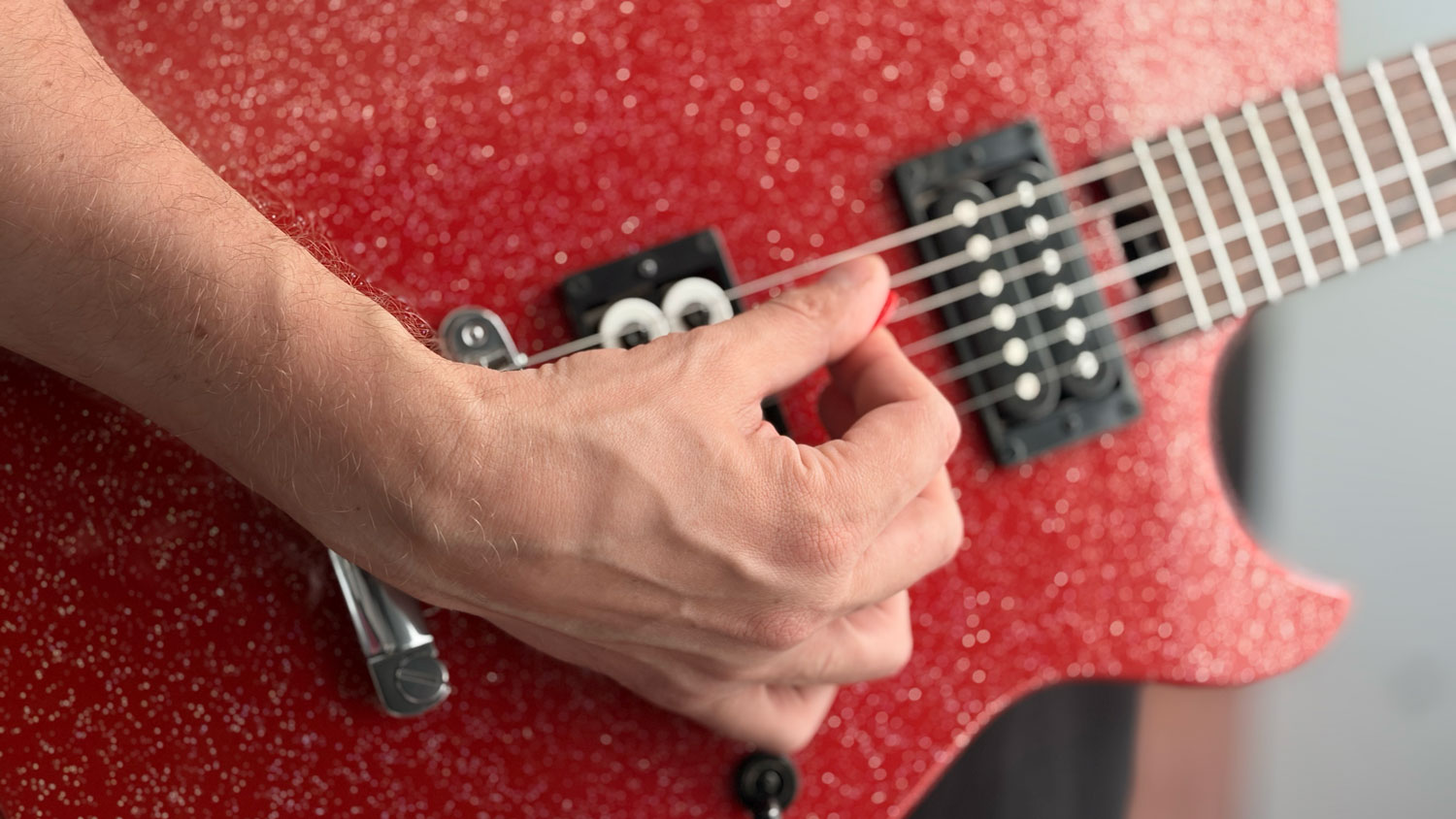
Alternate picking appears simple: play one downstroke, then one upstroke, and continue alternating.
But clean alternate picking requires more than moving the pick up and down. Your picking hand must remain relaxed, both strokes must sound consistent, the pick must pass through the string efficiently, and the fretting hand must arrive at every note at exactly the right moment.
Many guitarists try to improve their alternate picking by increasing the metronome. They practice the same scale or chromatic pattern faster and faster, expecting speed to develop automatically.
But speed is rarely the only problem.
Watch the full video breakdown:
During my guitar technique feedback sessions, I repeatedly see the same technical limitations:
- Excessive picking-hand tension
- Too much pick depth
- A weak or rushed upstroke
- Large and inefficient movements
- Poor control during string changes
- Loss of synchronization between the hands
- Increasing the tempo before the technique is stable
These problems may remain hidden at slow tempos. As soon as the guitarist tries to play faster, the picking motion changes and the exercise begins to fall apart.
This guide explains how to recognize and correct the seven most common alternate picking mistakes.
Quick Answer: Why Does Alternate Picking Fall Apart?
Alternate picking usually becomes inconsistent because the movements become larger and more tense as the tempo increases.
The pick begins entering the strings more deeply. The wrist becomes rigid. The forearm or elbow starts doing more work. The upstroke becomes weaker, and the fretting hand can no longer stay synchronized with every pick attack.
To improve alternate picking:
- Use small, relaxed movements
- Keep the pick contact relatively shallow
- Train downstrokes and upstrokes equally
- Practice string changes in isolation
- Use short speed bursts
- Increase the tempo only after several clean repetitions
- Stop immediately when the movement begins to change
Clean speed is the result of efficient movement and consistent timing.
Table of Contents
In this guide
What Is Alternate Picking?
Alternate picking is a guitar technique in which consecutive notes are played with alternating downstrokes and upstrokes:
Down – Up – Down – Up
The direction should continue alternating even when you move to another string.
Alternate picking is used in:
- Scales and lead guitar phrases
- Metal and rock riffs
- Tremolo picking
- Rhythm guitar
- Repeated-note patterns
- Technical exercises
- Fast string-crossing passages
A controlled alternate picking technique requires:
- Even downstrokes and upstrokes
- Small picking movements
- Stable pick depth
- Relaxed wrist motion
- Accurate string crossing
- Good rhythm
- Synchronization between both hands
Let’s examine the mistakes that most often limit these qualities.
Mistake 1: Using Too Much Picking-Hand Tension
Many guitarists tighten the picking hand when they try to play faster.
They squeeze the pick, stiffen the wrist, contract the forearm, and sometimes even raise the shoulder. This creates a temporary feeling of control, but it prevents the hand from moving freely.
Avoid this:
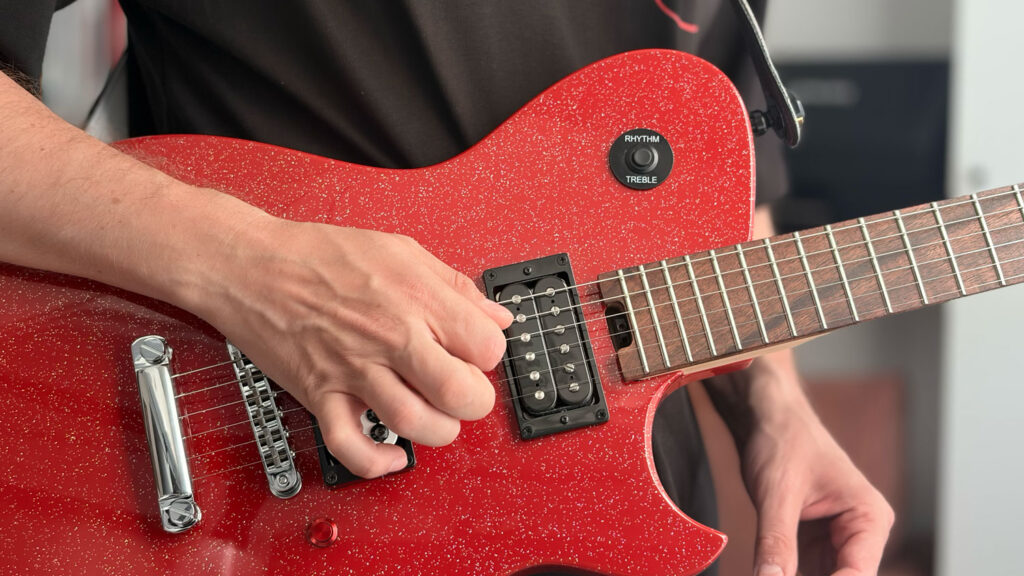
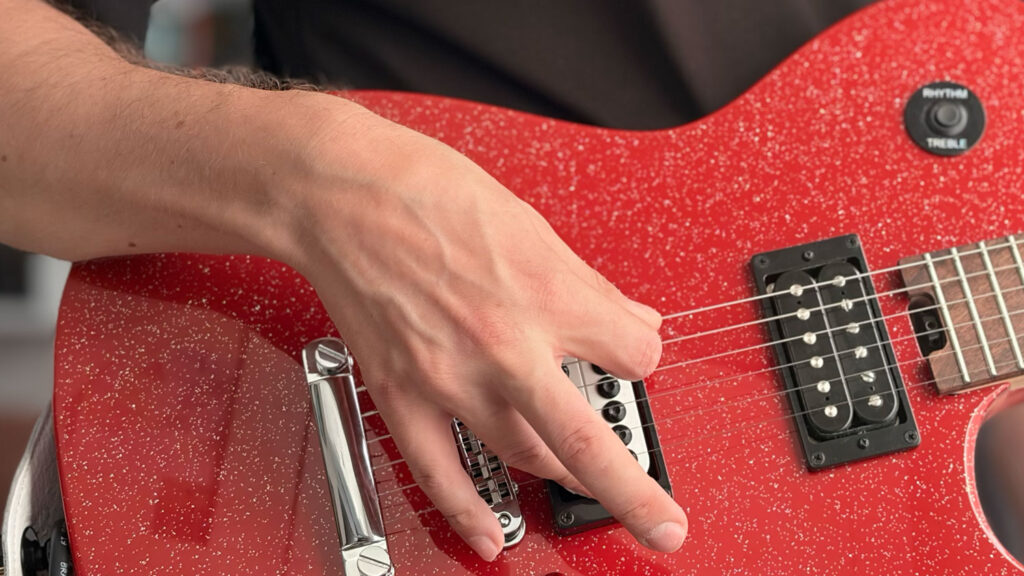
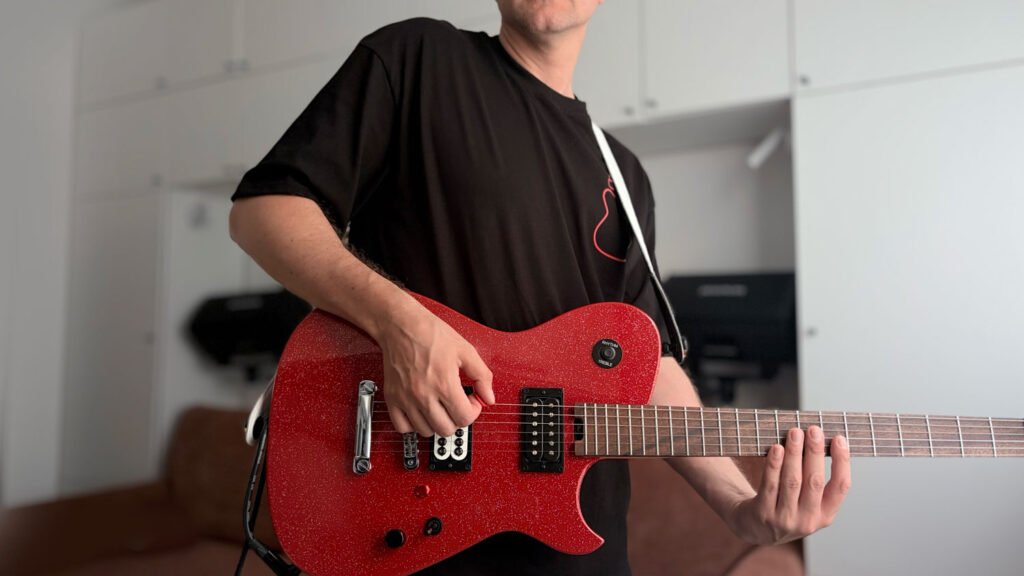
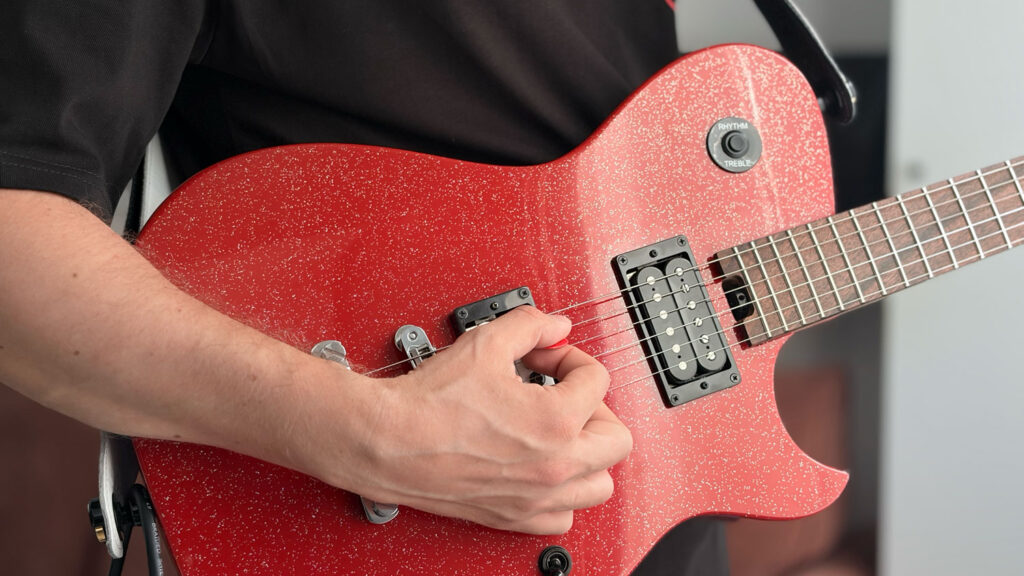
Excessive tension can cause:
- The pick to get trapped by the string
- Uneven timing
- Weak or rushed upstrokes
- Large picking movements
- Rapid forearm fatigue
- Loss of control during longer phrases
Some tension is necessary to hold the pick, but you should not use more than the movement requires.
How to Check Your Tension
Play alternate picking on one muted string for approximately ten seconds.
Pay attention to:
- Thumb and index finger
- Remaining picking-hand fingers
- Wrist
- Forearm
- Elbow
- Shoulder
- Neck and jaw
Stop suddenly.
Your hand and forearm should relax almost immediately. If they remain rigid, you are probably using unnecessary tension.
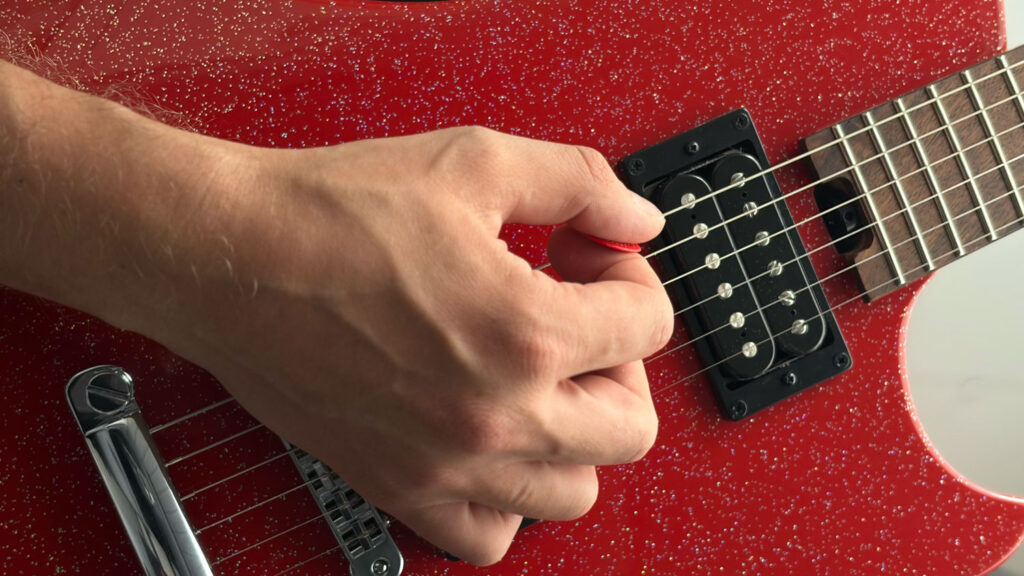
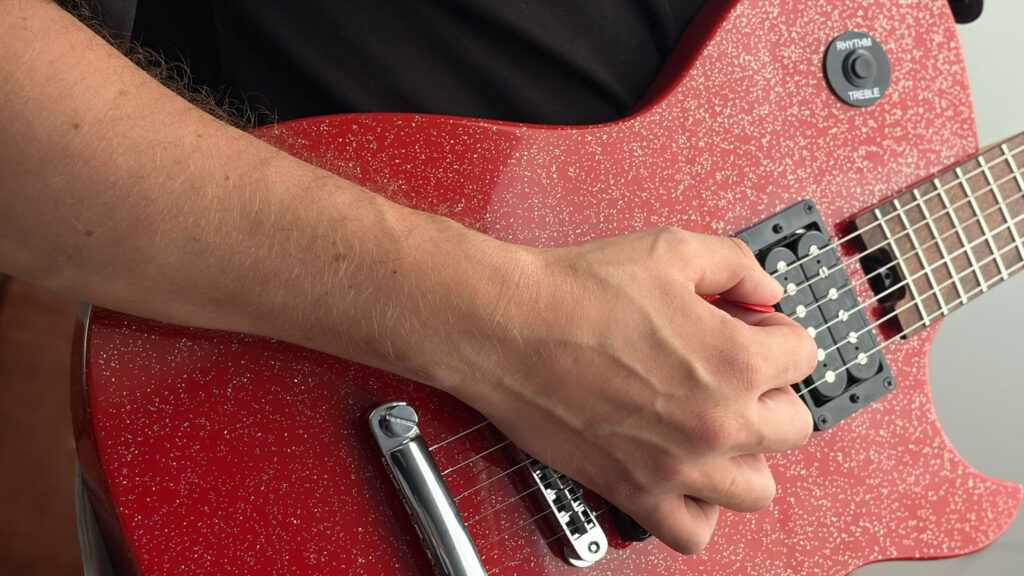
Example of an efficient picking-hand position:
Exercise: Tension Reset
Play four or eight alternate-picked notes on one string.
Then:
- Stop.
- Relax the thumb and index finger slightly.
- Release tension in the remaining fingers.
- Drop the shoulder.
- Begin the next repetition.
Gradually increase the number of notes between resets.
The goal is to recognize what relaxed picking feels like before trying to increase speed.
For a deeper explanation, read:
Picking Hand Position: How to Play Faster With Less Tension
Mistake 2: Digging the Pick Too Deep Between the Strings
Excessive pick depth creates additional resistance.
The farther the pick travels between the strings, the more the string must bend before it releases. The guitarist often responds by gripping the pick harder and making a larger movement.
Too deep:
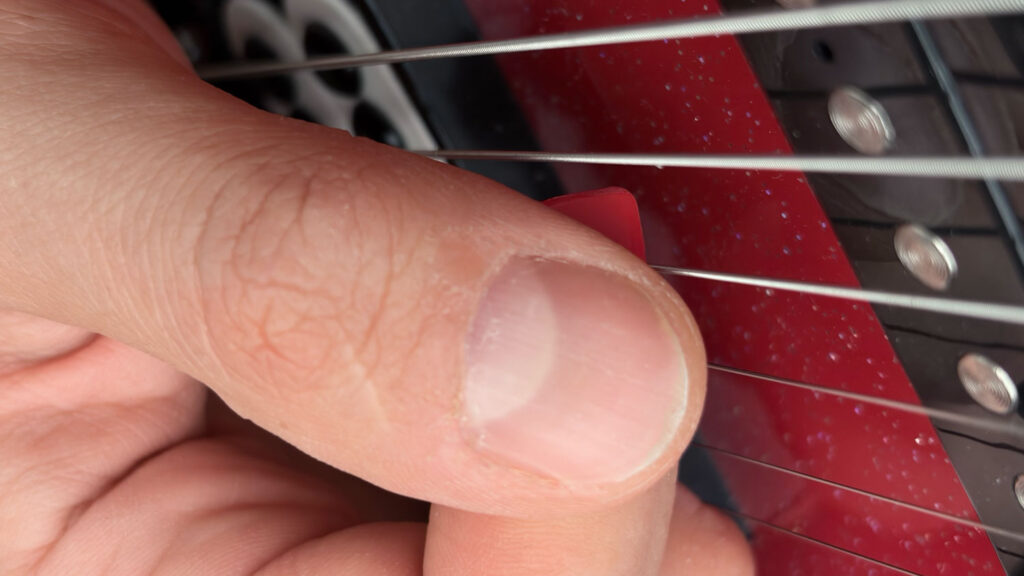
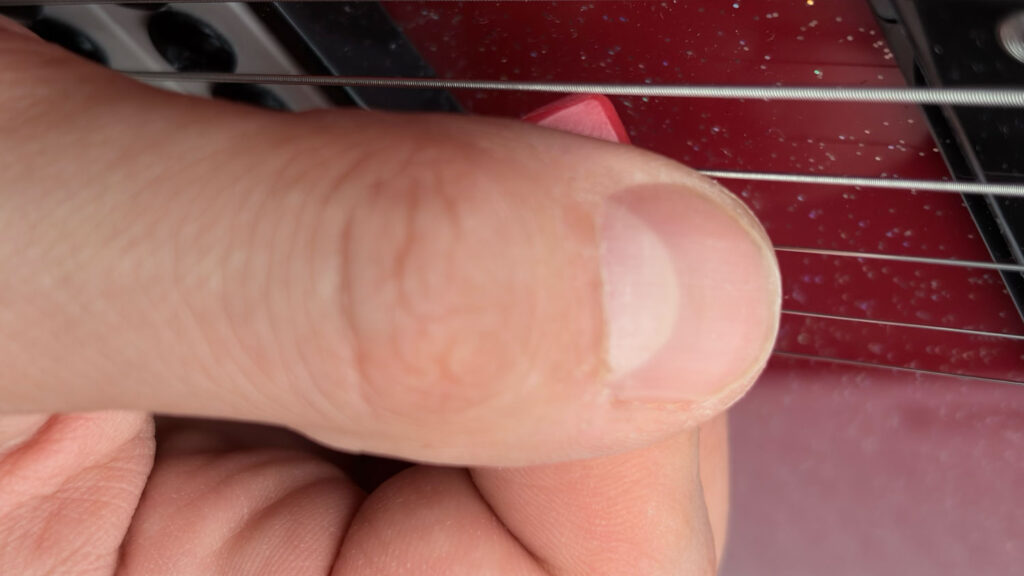
Common signs include:
- The pick feels stuck
- The pick rotates in your fingers
- The attack sounds heavy or scratchy
- String changes feel difficult
- The thumb and forearm become tense
- Fast picking feels physically demanding
Controlled depth:
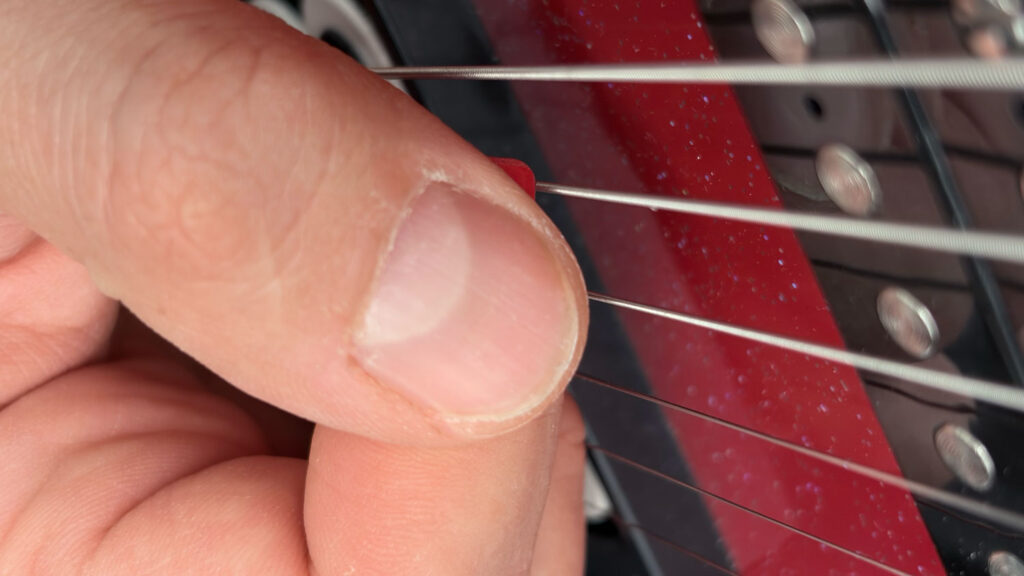
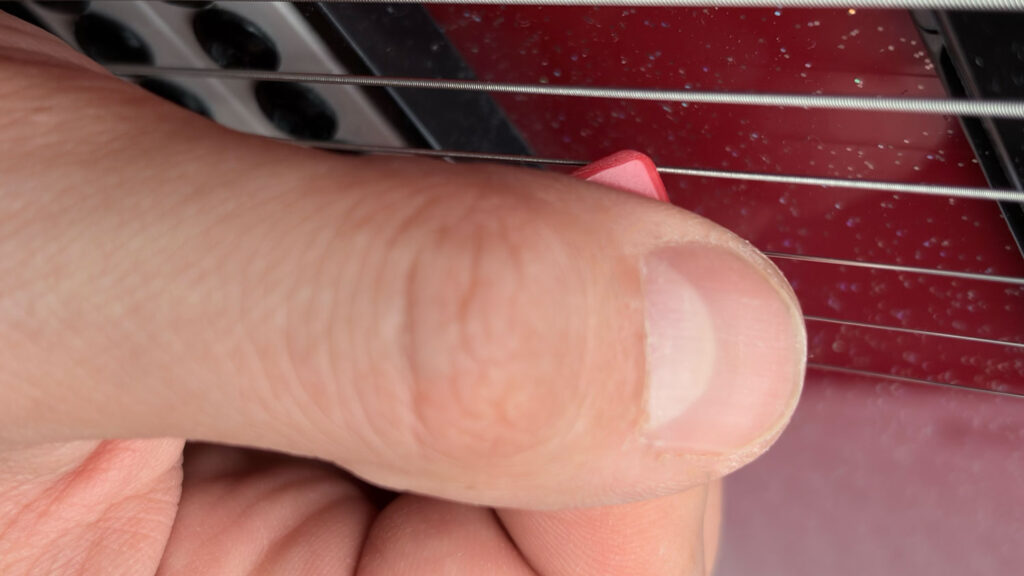
For most fast alternate picking, only a small part of the pick needs to pass through the string.
The goal is not zero contact. You still need enough depth for a clear note.
Use the minimum practical pick depth that produces a confident attack without unnecessary resistance.
Exercise: Deep, Shallow, and Balanced Contact
Mute one string with your fretting hand.
Compare three versions:
- Intentionally deep pick contact
- Extremely shallow contact
- Balanced contact with a clear attack and low resistance
Notice the difference in:
- Resistance
- Movement size
- Grip pressure
- Tone
- Control
Then practice the balanced version using slow alternate strokes.
A slight edge angle may also help the pick pass through the string more smoothly, but avoid an extreme angle that produces excessive scraping noise.
For a detailed guide, read:
How Deep Should the Pick Go Between the Strings?
Mistake 3: Allowing the Upstroke to Become Weaker
A weak upstroke creates uneven alternate picking.
Many guitarists treat the downstroke as the main attack and the upstroke as a quick return to the starting position.
The result often sounds like:
LOUD – quiet – LOUD – quiet
At higher tempos, the weak upstroke may become rushed, causing unstable rhythm and poor synchronization.
The upstroke is not just a recovery movement. It is a complete pick stroke and should be able to produce a clear note independently.
How to Test Your Upstroke
Play continuous alternate picking on one string and record the audio.
Listen for differences in:
- Volume
- Attack
- Timing
- Pick noise
Then accent every second note:
down – UP – down – UP
If this feels significantly more difficult than accenting the downstrokes, your upstroke probably needs additional work.
Exercise 1: Begin With an Upstroke
Play a short four-note chromatic pattern, beginning each repetition with an upstroke:
Up – Down – Up – Down
This changes the familiar coordination and forces the upstroke to become the first deliberate movement.
Exercise 2: Upstroke Accents
Play steady alternate picking while accenting every upstroke.
Keep the picking motion compact. Do not create the accent by making a dramatically larger movement.
Exercise 3: Upstroke-Only Control
Play a simple one-string pattern using only upstrokes for a short period.
This is not your final performance technique. It is an isolation exercise for the weaker direction.
Afterward, return to normal alternate picking and compare both strokes.
Mistake 4: Making the Picking Motion Too Large
Large movements waste time and energy.
If the pick travels far above and below the string, it must cover unnecessary distance before the next note.
This may not cause an obvious problem at slow tempos, but it becomes a major limitation when the note spacing becomes shorter.
Efficient alternate picking should be compact.
The pick needs to cross the string, but it does not need to travel far beyond it.
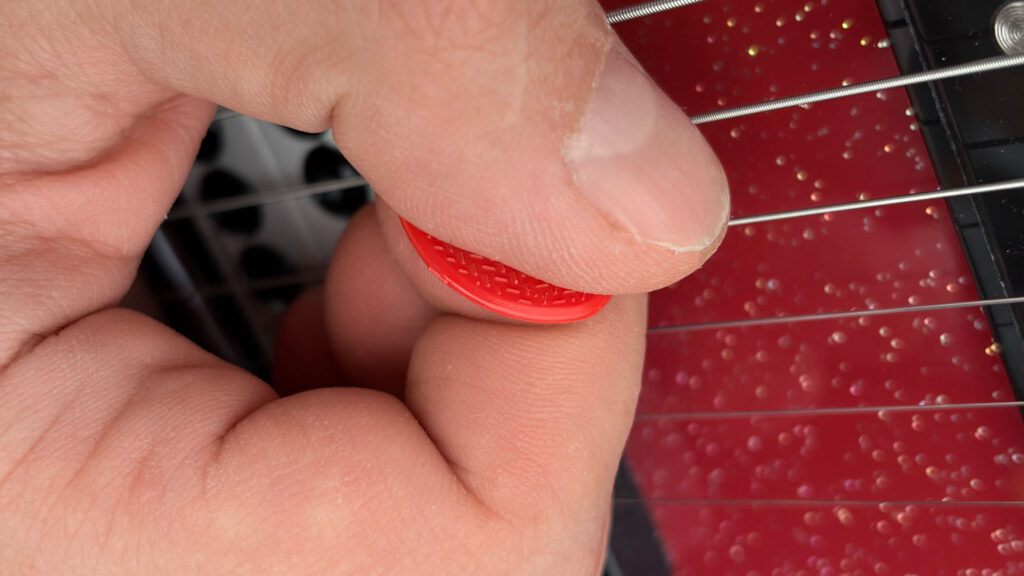
Pick Angle and String Resistance:
One-string alternate picking exercise
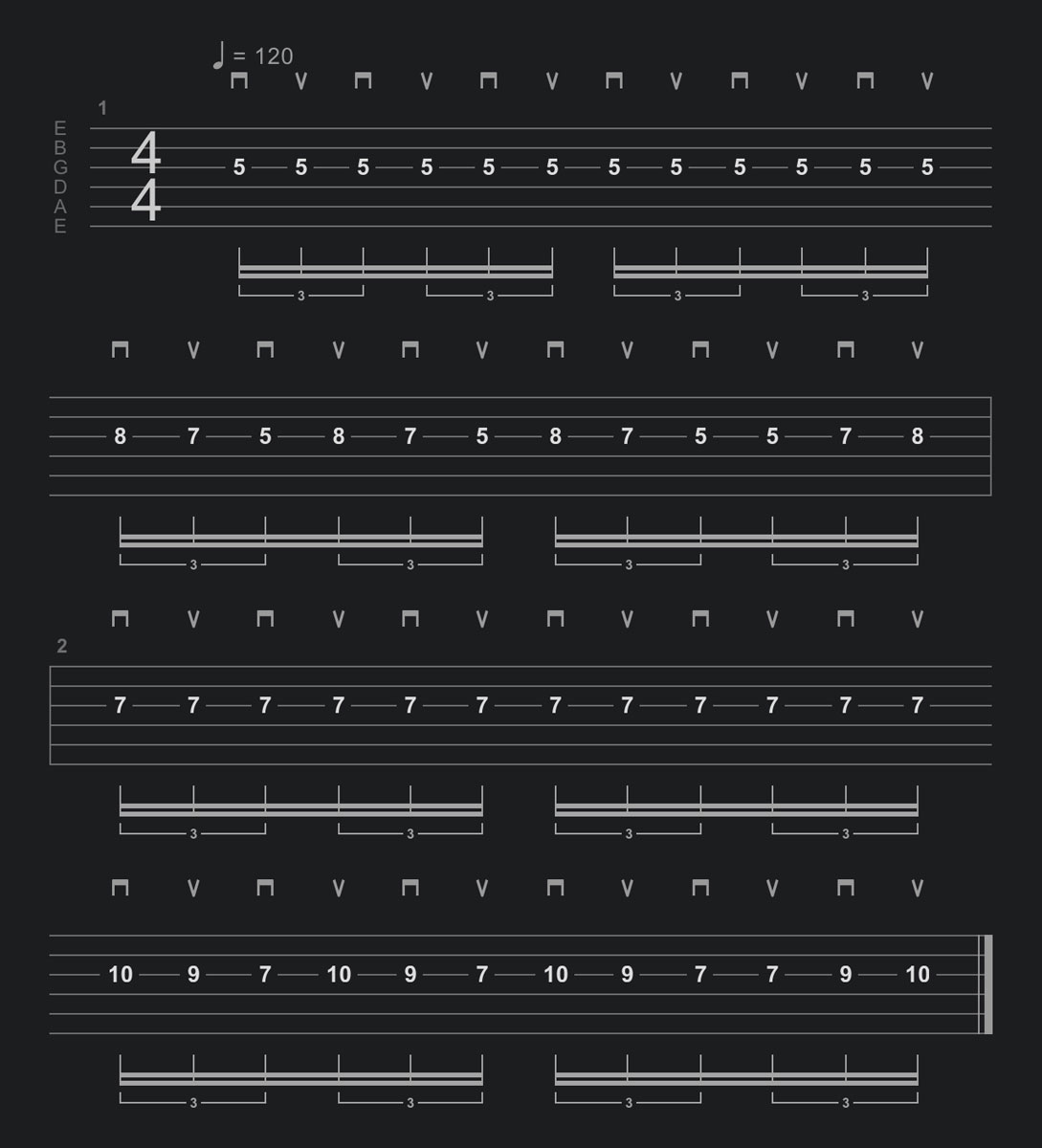
Where Should the Movement Come From?
For many alternate picking situations, the wrist can provide the main repeated motion.
The forearm may make small adjustments during string changes or changes in palm muting, but it should not necessarily drive every note with a large movement.
Common signs of excessive arm movement include:
- The elbow moves on every stroke
- The wrist appears locked
- The shoulder rises
- The motion becomes larger as the tempo increases
- The forearm becomes tired quickly
- String targeting becomes inaccurate
Forearm movement is not automatically wrong. The problem is unnecessary size and tension.
Exercise: Minimum-Movement Picking
Mute one string and play slow alternate strokes.
Gradually reduce the distance the pick travels after crossing the string.
Find the smallest movement that still produces a clear, reliable attack.
Record the exercise from the front or side. Picking movements often look much larger on video than they feel while playing.
For a deeper comparison, read:
Wrist vs Forearm Picking: Which Movement Should You Use?
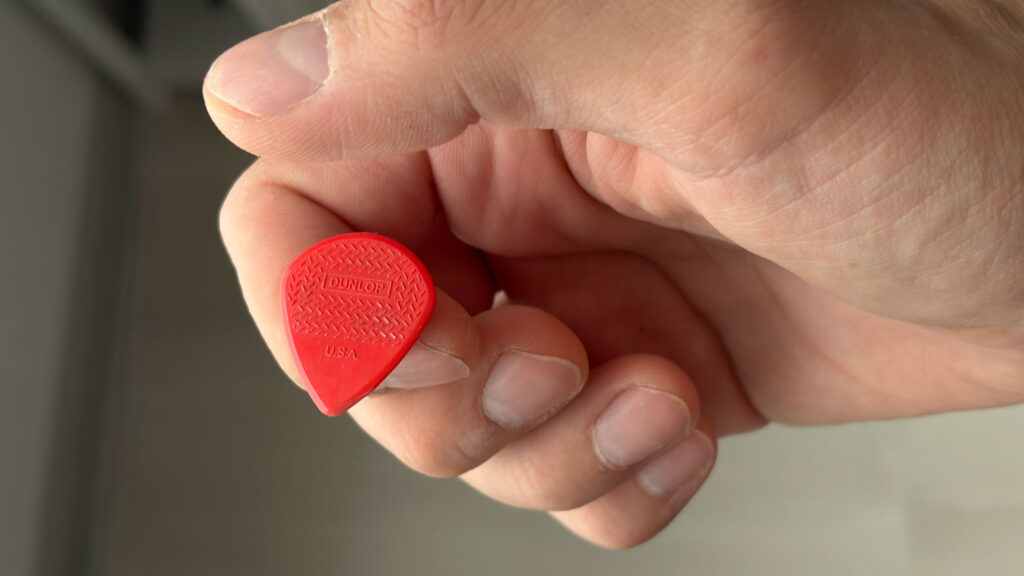
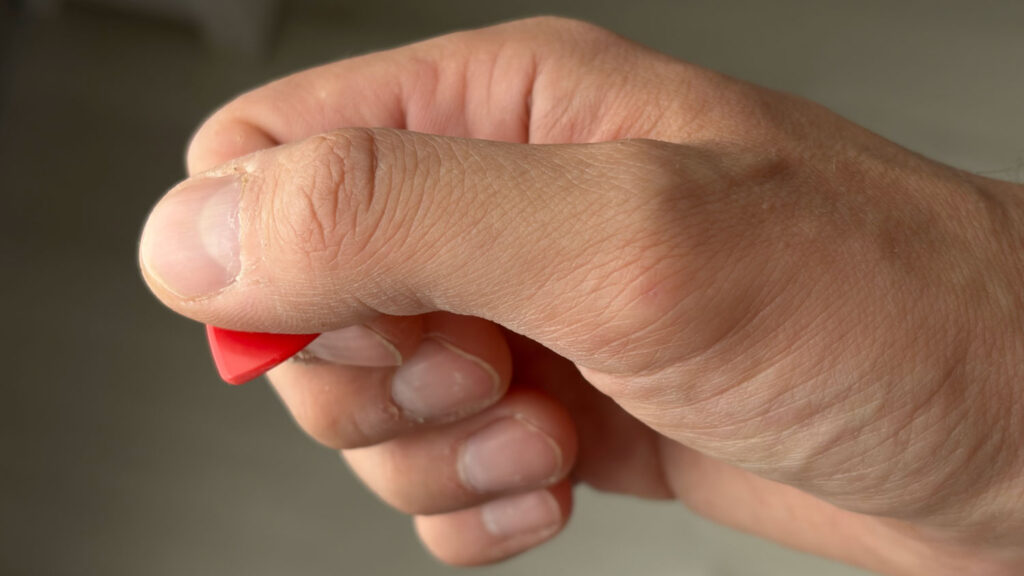
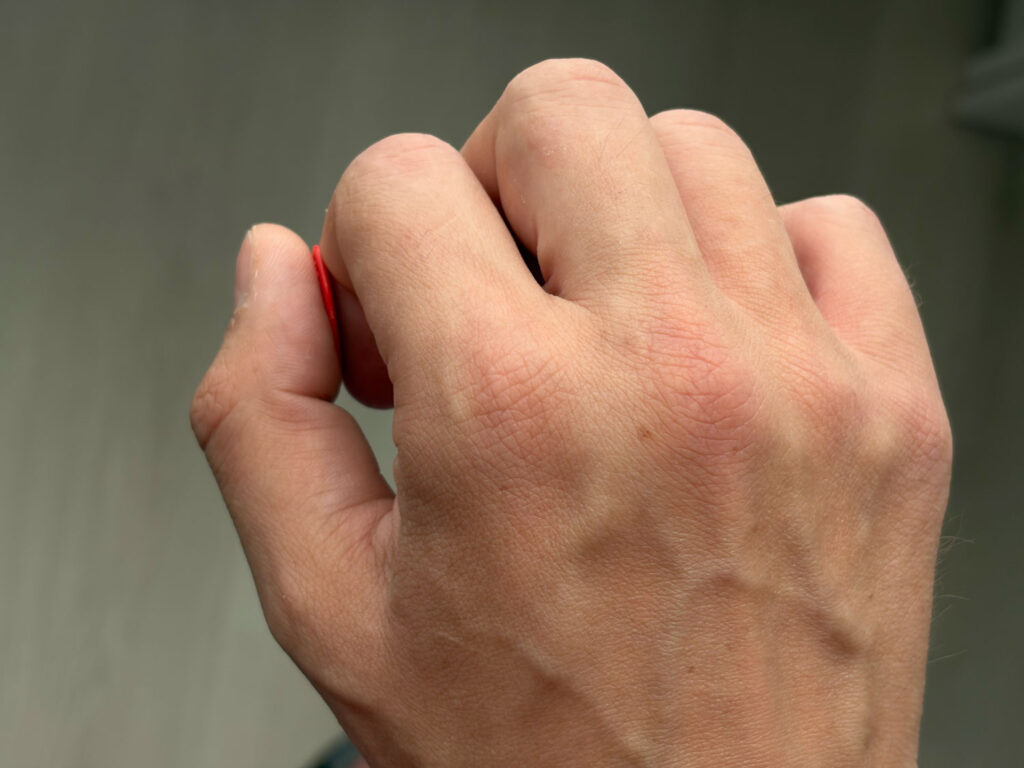
How I hold a pick:
Mistake 5: Ignoring Inside and Outside Picking
Alternate picking becomes more difficult when you change strings.
Depending on the picking direction, the pick may move:
- Into the space between two strings
- Away from the space between two strings
These situations are commonly described as inside picking and outside picking.
Many guitarists are comfortable with one string-crossing direction but not the other.
A scale may feel easy when it begins with a downstroke but become awkward when it begins with an upstroke. The notes have not changed, but the picking sequence has.
Common String-Crossing Problems
- Pausing before the next string
- Hitting an adjacent string
- Making a large circular movement
- Accidentally repeating a downstroke or upstroke
- Changing the hand position completely
- Tensing the forearm during the transition
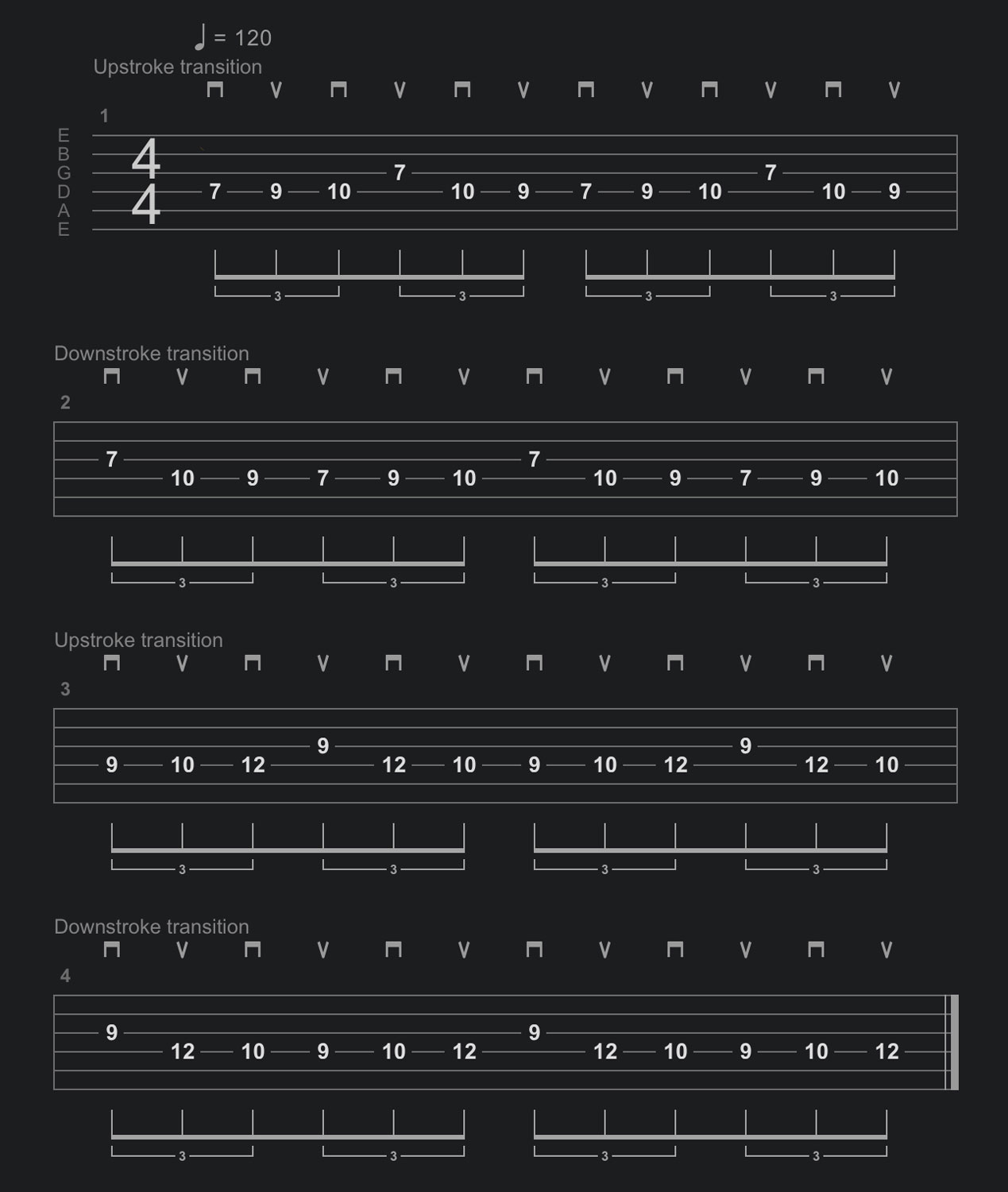
Exercise 1: Two-String Alternation
Choose two adjacent strings.
Play one note on each:
Lower string – Higher string – Lower string – Higher string
First begin with a downstroke.
Then repeat beginning with an upstroke.
The two versions create different string-crossing situations.
Observe which version feels less comfortable and practice it separately.
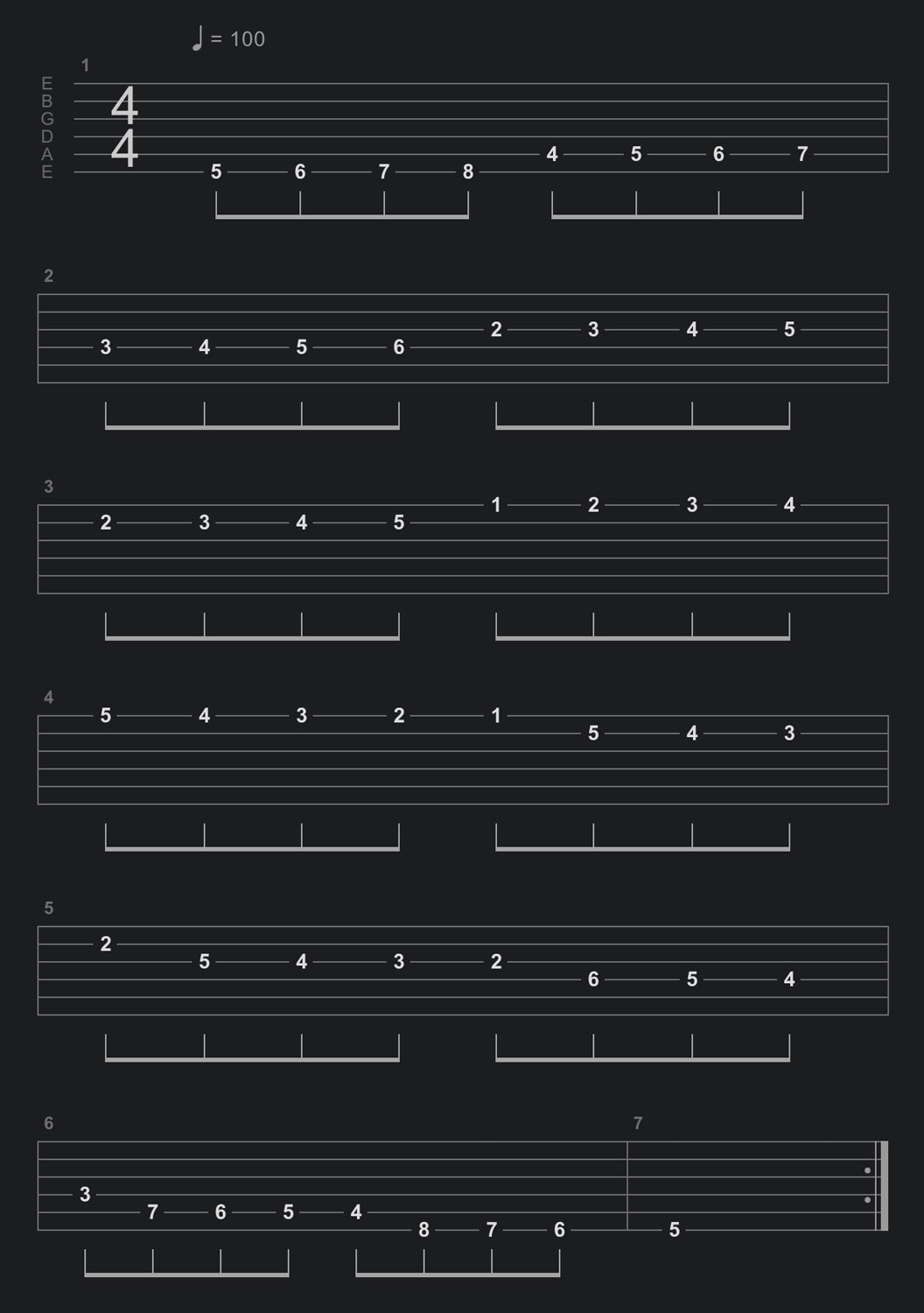
Exercise 2: Four Notes Per String
Play a four-note chromatic pattern on two or more strings.
Because four is an even number, the starting stroke repeats consistently on every string.
Practice the pattern beginning with both a downstroke and an upstroke.
Exercise 3: Three Notes Per String
Use a short three-note-per-string pattern across two strings.
Because three is an odd number, the picking direction changes on every new string.
Do not begin with the full scale. Isolate one transition and keep the movement small.
Two-string crossing exercise
Mistake 6: Losing Synchronization Between Both Hands
You can have a fast picking hand and a fast fretting hand but still sound unclear if they do not arrive at the note together.
For every clean picked note:
- The fretting finger must prepare the note.
- The pick must strike the string.
- Both actions must occur at the correct moment.
If the pick arrives too early, you may hear an open string, muted note, or repeated previous note.
If the fretting finger arrives too early, you may hear an accidental hammer-on or pull-off.
Signs of Poor Synchronization
- Notes disappear at higher tempos
- The phrase sounds blurred
- The beginning is clean but the ending falls apart
- You hear accidental legato
- String changes interrupt the timing
- The picking hand rushes ahead
- The fretting fingers lift too far from the fretboard
Exercise 1: Four-Note Bursts
Choose a simple four-note chromatic pattern.
Play four fast notes, then stop.
Use the pause to relax and reset both hands.
Repeat:
Four notes – Rest – Four notes – Rest
When every four-note group is clean, increase the burst to six or eight notes.
Do not increase both the speed and the number of notes at the same time.
Exercise 2: Accent the First Note
Play a repeating group of four and accent the first note:
ONE – two – three – four
Align the accent with the metronome.
This gives both hands a shared synchronization point.
Exercise 3: Isolate the Failure Point
Stop immediately after the first missing, muted, or blurred note.
Identify whether the error occurred:
- During a string change
- During an upstroke
- During a descending finger movement
- When the picking motion became larger
- When the hand became tense
Repeat only the smallest section around the mistake.
For a complete synchronization guide, read:
Why Your Hands Lose Synchronization at Higher Speeds
Chromatic pattern for synchronization
Mistake 7: Increasing the Tempo Before the Technique Is Stable
The metronome is useful, but the BPM number can become a distraction.
Many guitarists increase the tempo after one successful repetition. They continue even when the pick depth, movement size, and synchronization begin changing.
This means they are no longer practicing the correct technique.
They are practicing the mistake.
Every repetition reinforces a movement pattern. If most repetitions are tense and unclear, the body becomes better at repeating that tension and inconsistency.
When Should You Increase the Tempo?
Increase the metronome only when you can play the exercise:
- Cleanly
- In time
- Without excessive tension
- With even downstrokes and upstrokes
- With controlled pick depth
- With stable hand synchronization
- Several times in a row
One clean repetition may happen by chance. The movement must be repeatable.
Exercise: The Clean Tempo Ladder
Choose a short alternate picking exercise.
- Begin at a comfortable tempo.
- Play three clean repetitions.
- Increase the tempo by 2–5 BPM.
- Repeat only while the movement remains stable.
- Stop when tension or inconsistency appears.
- Reduce the tempo by approximately 5–10 BPM.
- Finish with several clean repetitions.
Your highest controlled tempo may change from day to day.
That is normal.
The purpose of practice is to improve the movement, not to prove a number.
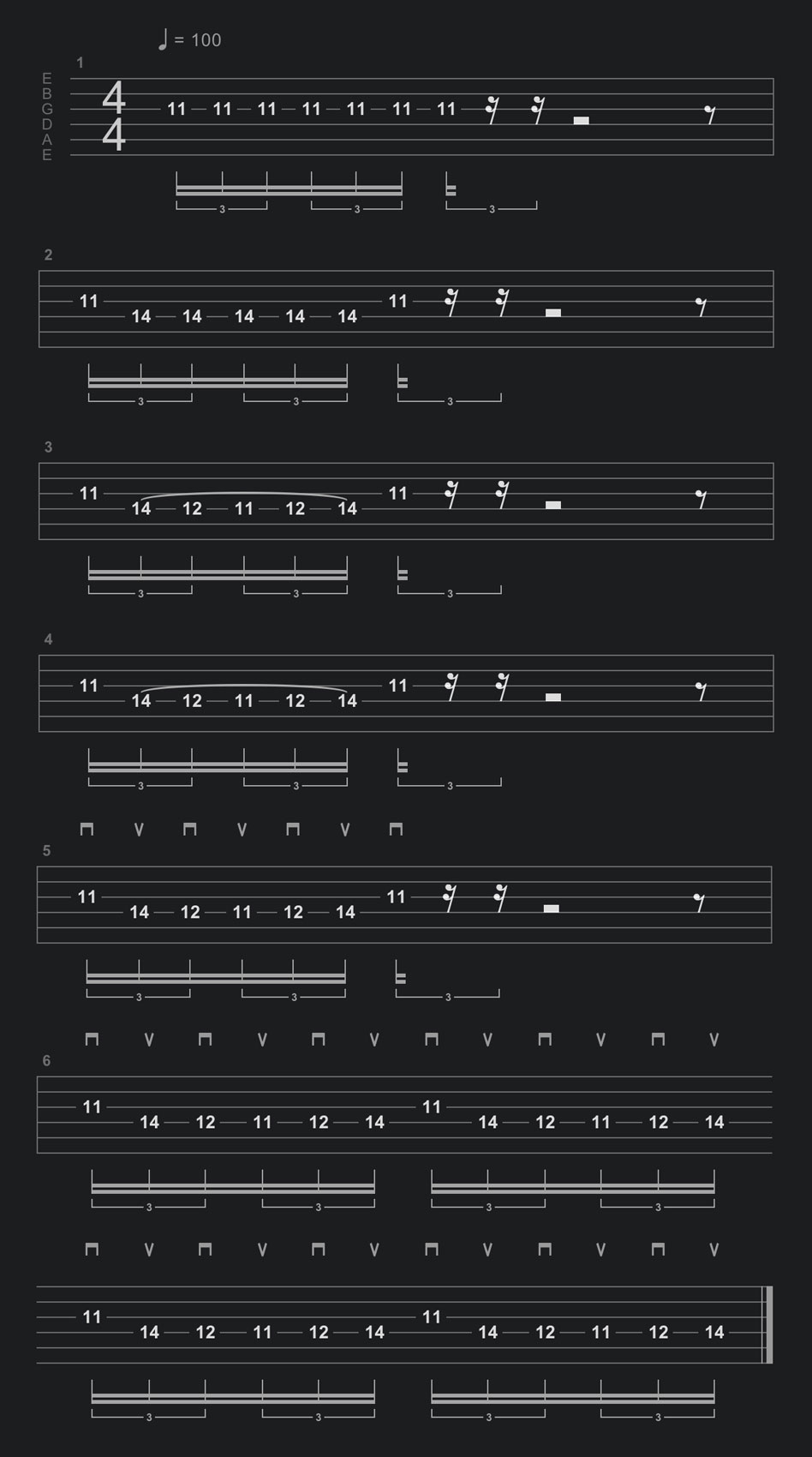
Speed bursts exercise
Want a structured way to build speed without losing control? Try my free Guitar Speed Builder workout, which takes you progressively from short picking bursts to longer, controlled fast patterns.
How to Practice Alternate Picking Effectively
Do not try to correct every technical problem simultaneously.
Before beginning an exercise, decide what you are training:
- Relaxation
- Pick depth
- Upstroke control
- Movement size
- String crossing
- Hand synchronization
- Rhythm
- Speed
Use the simplest pattern that exposes that problem.
For example, you do not need a long scale to work on pick depth. One muted string is enough.
You do not need a complete solo to work on a string transition. Two strings and four notes may be more useful.
A Focused 15-Minute Alternate Picking Routine
1. Relaxed One-String Picking — 2 Minutes
Play alternate strokes on one string.
Focus on:
- Light grip
- Relaxed wrist
- Equal downstrokes and upstrokes
- Shallow, consistent contact
2. Upstroke Control — 2 Minutes
Begin patterns with an upstroke or accent every upstroke.
3. Movement Reduction — 2 Minutes
Reduce the picking distance while keeping every note clear.
4. Two-String Crossing — 3 Minutes
Practice one transition beginning with both stroke directions.
5. Hand Synchronization — 3 Minutes
Use a short chromatic pattern and stop immediately after an error.
6. Speed Bursts — 3 Minutes
Play short fast groups followed by complete relaxation.
This routine should improve control, not exhaust your hand.
Should You Practice Alternate Picking Slowly?
Slow practice is useful when it helps you observe:
- Pick depth
- Hand tension
- Movement size
- Finger movement
- Rhythm
- String changes
However, do not use exaggerated slow movements that could never work at higher speeds.
Even at a slow tempo, keep the pick stroke compact and the fretting fingers close to the strings.
Some fast movements must also be tested through short bursts. A combination of controlled slow practice and brief faster repetitions is often more effective than using only one tempo.
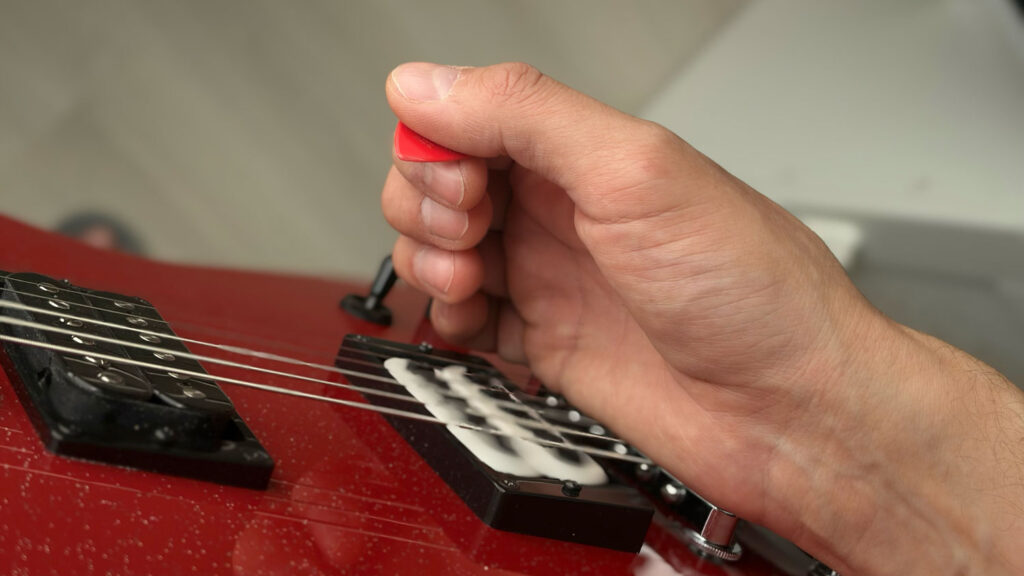
Check the position of your picking hand:

How to Analyze Your Alternate Picking
Record your picking hand from several angles.
Player’s Perspective
Useful for:
- Pick depth
- Picking direction
- String crossing
- Hand tracking
Front View
Useful for:
- Wrist movement
- Elbow movement
- Finger tension
- Pick grip
Side View Near the Bridge
Useful for:
- Palm position
- Pick angle
- Pick depth
- Wrist height
Record the same exercise at:
- A comfortable tempo
- A medium tempo
- The first tempo where the technique begins to change
Do not record only your maximum speed.
Should You Always Use Alternate Picking?
Alternate picking is not the only valid guitar-picking technique.
Depending on the phrase, guitarists may also use:
- Economy picking
- Directional picking
- Sweep picking
- Legato
- Hybrid picking
However, controlled alternate picking provides an excellent foundation.
It develops:
- Rhythm
- Upstroke strength
- Pick-direction awareness
- String-crossing control
- Picking-hand consistency
- Synchronization between both hands
Even if you later combine several techniques, improving alternate picking can make your overall playing cleaner and more controlled.
Final Thoughts
Good alternate picking is not about forcing your hand to move faster. It is about making every stroke predictable, controlled, and repeatable.
When your technique is efficient, speed becomes easier to build because you are no longer fighting unnecessary resistance or trying to compensate for unstable movements.
Pay attention to what happens when you approach your limit. The first sign of a problem is often not a missed note, but a small change in your technique: the hand tightens, the motion changes, or the timing becomes less consistent. That is the moment to slow down, reset, and correct the movement before continuing.
Measure progress by the quality of your repetitions, not only by the highest BPM you can reach once.
Clean alternate picking should feel controlled and repeatable — not like a fight against the strings.
Frequently Asked Questions About Alternate Picking
Why does my alternate picking sound uneven?
Uneven alternate picking is commonly caused by a weak upstroke, excessive tension, inconsistent pick depth, large movements, or poor synchronization between both hands.
How can I improve my alternate picking speed?
Focus first on efficiency. Use small wrist movements, shallow pick contact, balanced downstrokes and upstrokes, short speed bursts, and gradual metronome increases.
Why does my pick get stuck between the strings?
The pick may be entering too deeply, the grip may be too tense, or the picking motion may be too large. Reduce the depth and check the position of the picking hand.
Should I practice alternate picking slowly?
Yes, but keep the movements compact. Slow practice should reinforce the same efficient motion you want to use at higher speeds.
Why is my upstroke weaker than my downstroke?
The upstroke may have become a passive return movement. Practice beginning with an upstroke and accenting the upstroke separately.
Why do I lose control when changing strings?
You may be using a large movement, pausing before the transition, or struggling with one inside- or outside-picking direction. Isolate the transition between two strings.
Should my picking hand rest on the bridge?
Light contact near the bridge can provide stability and muting control. Excessive pressure may restrict wrist movement and create tension.
How do I synchronize my picking and fretting hands?
Use short chromatic patterns, rhythmic accents, four-note bursts, and controlled metronome practice. Stop immediately when the hands separate.
How quickly should I increase the metronome?
Small increases of approximately 2–5 BPM are usually enough. Increase only after several clean and relaxed repetitions.
Why can I play fast once but not repeat it?
One successful repetition does not mean the movement is stable. Reliable speed requires consistent timing, relaxation, and repeatability.
Personal Guitar Technique Analysis
A problem that feels like a lack of speed may actually come from pick depth, picking-hand tension, weak upstrokes, inefficient string crossing, or synchronization between both hands.
During a personal Guitar Technique Analysis, I examine your playing, identify the main technical limitations, and prepare specific corrections and exercises for your current level.
Record a short video with both hands clearly visible and send it for a detailed personal breakdown.
Support My Work
Not looking for personal feedback? If my guitar lessons, articles, and free resources have helped you, you can support my work and help me create more free guitar content.